Erstes US-Typhon-Raketen-Start: Tomahawk-Rakete trifft Ziel in 391 Meilen Entfernung
Es kann Ziele jenseits von 932 Meilen treffen, wobei neuere Versionen über 1.118 Meilen Reichweite erzielen. Es nutzt mehrstufige Führungssysteme, darunter Inertialnavigation und GPS-Updates.

Kurzfassung
Warum das wichtig ist
- Es kann Ziele jenseits von 932 Meilen treffen, wobei neuere Versionen über 1.118 Meilen Reichweite erzielen.
- Es nutzt mehrstufige Führungssysteme, darunter Inertialnavigation und GPS-Updates.
- The geometry of warfare in the Pacific is shifting toward land.
The event shows how ground forces can project precision power across island chains. It also underscores a growing focus on mobile strike systems in contested maritime regions.Expanding land-based strike reachThe Typhon system gives the United States a ground-launched deep-strike option. It reduces reliance on naval and air platforms in high-threat environments.
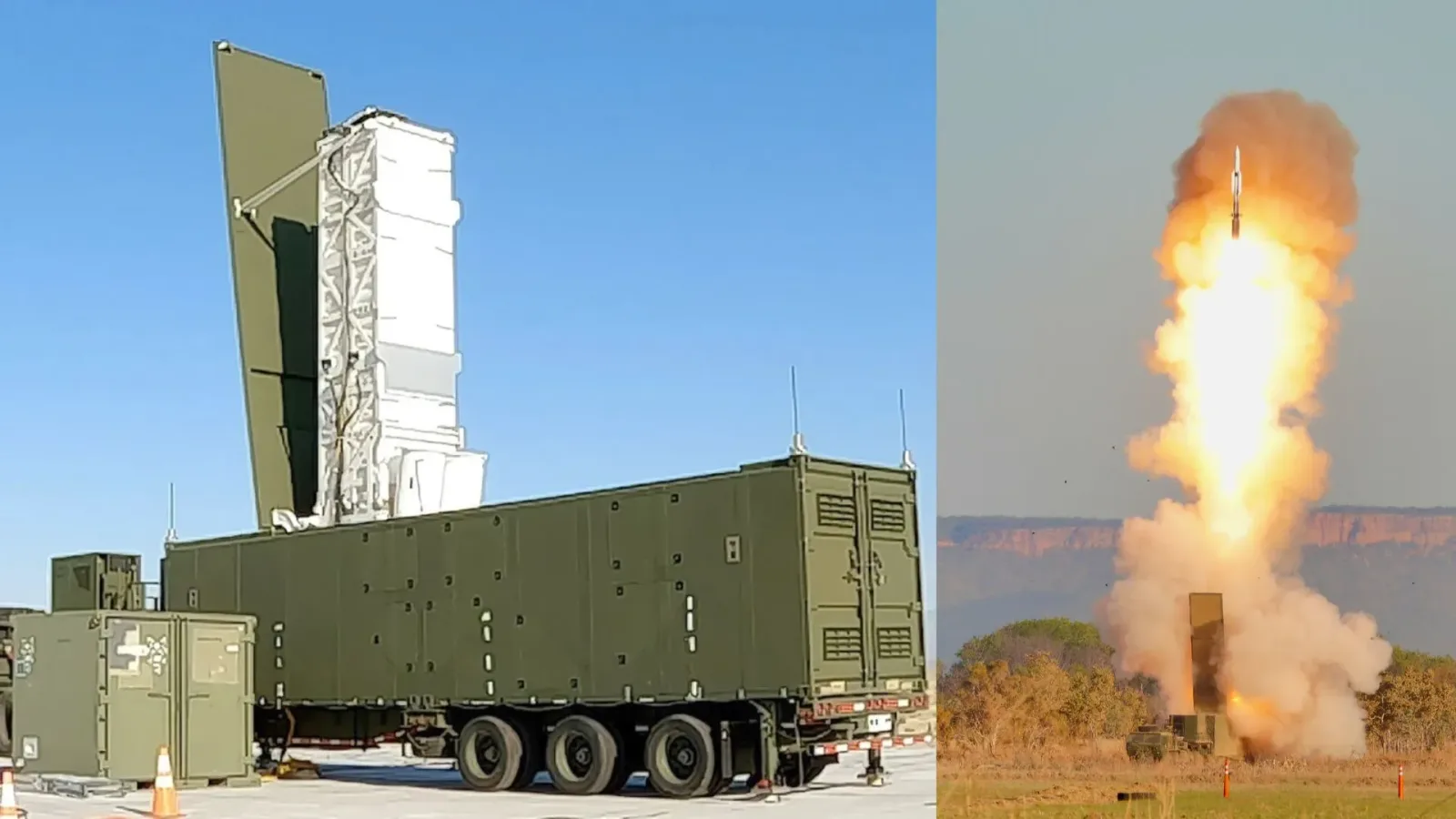
This matters in areas shaped Analyst Erwan Halna du Fretay of Army Recognition Group notes the system reflects a broader shift toward distributed operations. It strengthens deterrence planning cycles.The launcher uses a modular architecture. It can fire both the Tomahawk Land Attack Missile (TLAM) and the Standard Missile-6. Each launcher sits on a trailer towed M983A4 HEMTT truck.
It carries four missile canisters that elevate vertically before launch.Colonel Dennis Hernandez confirmed the system’s use during the drill. He stated that the Typhon system fired a Tomahawk Land Attack Missile during the early phase of the exercise.
The launch marked its first operational
The launch marked its first operational use in the Philippines since April 2024.The engagement involved a coordinated sequence from Tacloban toward a land-based target in central Luzon. It highlighted how quickly such systems can execute precision strikes once deployed.Tomahawk capability spotlightThe Tomahawk Land Attack Missile (TLAM) remains central to Typhon’s capability. The BGM-109 variant flies at about 547 mph.
It can strike targets beyond 932 miles, with newer versions exceeding 1,118 miles.It uses layered guidance systems, including inertial navigation and GPS updates. Terrain contour matching helps it navigate complex landscapes. Advanced variants use Digital Scene Matching for terminal precision. The missile flies at low altitude to reduce radar detection. Operators can also retarget it mid-flight using a two-way data link.
This adds flexibility during dynamic combat situations.Typhon’s mobility adds another advantage. Units can reposition quickly across difficult terrain, including austere island environments. This makes them harder to detect and target. However, the system depends on reliable communication and sensor networks. Electronic warfare or cyber disruption could affect performance.
Even so, when integrated into a
Even so, when integrated into a resilient network, Typhon delivers a powerful and flexible deep-strike capability.The combination of range, mobility, and precision reshapes how ground forces operate. It allows them to influence battles far beyond traditional artillery limits while supporting joint operations across multiple domains.Philippine forces integratedThe exercise also showed deeper military coordination.
Philippine Army personnel worked directly within the firing process. They operated near launchers and inside command and control systems.Soldiers observed targeting procedures, monitored tracking data, and supported engagement validation. Their role extended beyond observation into meaningful participation. This reflects a deliberate effort to build operational familiarity.This integration supports multi-domain operations.
These concepts combine intelligence, surveillance, reconnaissance, and precision fires into a unified network. It allows forces to act faster and with greater accuracy.The approach strengthens long-term cooperation between allied forces. It prepares both sides for complex scenarios that involve dispersed units and contested communications. It also signals a shift in training priorities.
Exercises now focus less on basic interoperability and more on high-end warfighting tasks.
Thema weiterverfolgen
Interne Verlinkung
Im Kontext weiterlesen
Diese weiterfuehrenden Links verbinden das Thema mit relevanten Archivseiten, Schlagwoertern und inhaltlich nahen Artikeln.
Technologie Archiv
Weitere Meldungen aus derselben Hauptkategorie.
Mehr von Interesting Engineering
Alle veroeffentlichten Inhalte derselben Quelle im Archiv.
Apple Intelligence: Nutzer wählen künftig das KI-Modell für iOS 27
Redaktionell verwandter Beitrag aus dem selben Themenumfeld.
US-Test: Kernbrennstoff reduziert Abfall und hält achtmal länger
Redaktionell verwandter Beitrag aus dem selben Themenumfeld.
Quellenprofil
Quelle und redaktionelle Angaben
- Quelle
- Interesting Engineering
- Originaltitel
- First US Typhon missile launch uses Tomahawk for 391-mile strike
- Canonical
- https://interestingengineering.com/military/us-typhon-missile-philippines-launch
- Quell-URL
- https://interestingengineering.com/military/us-typhon-missile-philippines-launch
Aehnliche Inhalte
Verwandte Themen und interne Verlinkung
Weitere Artikel aus aehnlichen Themenfeldern, damit Leser direkt im selben Kontext weiterlesen koennen.
Apple Intelligence: Nutzer wählen künftig das KI-Modell für iOS 27
Apple plant mit iOS 27, Nutzern die Wahl des KI-Modells zu geben, das Apple Intelligence antreibt. Durch das neue Feature „Extensions“ können externe Modelle wie Googles Gemini und Anthropic's Claude systemweit auf iPhones, iPads und Macs integriert werden.
06.05.2026
Live RedaktionUS-Test: Kernbrennstoff reduziert Abfall und hält achtmal länger
ANEEL, ein neues Kernbrennstoffmaterial, Thorium und angereichertes Uran kombiniert, hat einen mehrjährigen Irradiationstest Advanced Test Reactor in den USA erfolgreich abgeschlossen.
06.05.2026
Live Redaktion
AMD erweitert EPYC-CPUs mit Zen 7: Mehr Spezialisierung und Anpassung für KI und Cloud
Moderne Rechenzentrumslasten sind sehr vielfältig, und ebenso unterschiedlich sind Anforderungen Betreiber .
06.05.2026
Live RedaktionElektro-Schiffe laden auf See kabellos: Neues Magnet-System revolutioniert die Energiezufuhr
Elektroautos verfügen über Ladesäulen entlang jeder wichtigen Straße, doch der maritime Sektor verfügt noch immer über kein praktikables Offshore-Ladenetzwerk.
06.05.2026
Live Redaktion