SciTechDailyWelt

Entdeckung eines bemerkenswerten 150 Millionen Jahre alten Stegosaurierschädels: Neue Einblicke in die Dinosaurierevolution

Ein neu entdeckter Stegosaurus-Schädel Spanien liefert einzigartige Einblicke in Anatomie Evolution eines der ikonischsten Dinosaurier Europas.
6. Mai 2026RedaktionLive Redaktion
Rewriting Dinosaur Evolution: Scientists Unearth Remarkable 150-Million-Year-Old Stegosaur Skull

Kurzfassung

Warum das wichtig ist

SciTechDailyWelt
  • Ein neu entdeckter Stegosaurus-Schädel Spanien liefert einzigartige Einblicke in Anatomie Evolution eines der ikonischsten Dinosaurier Europas.
  • A newly discovered stegosaur skull from Spain is offering rare insight into the anatomy and evolution of one Europe's most iconic dinosaurs.
  • A rare skull from Spain is giving scientists a clearer look at one Europe's most important armored dinosaurs and reshaping ideas about how stegosaurs spread and evolved.

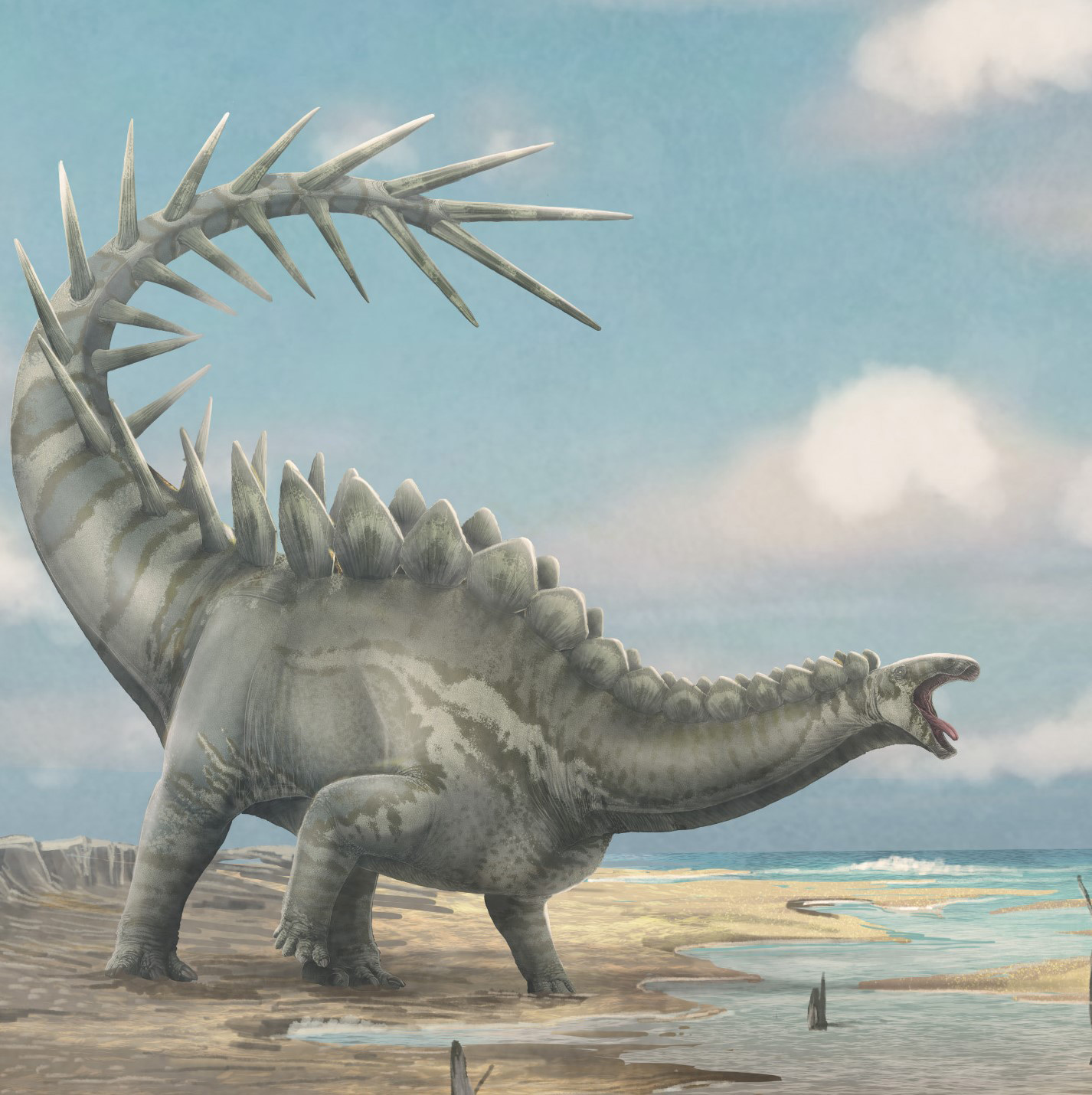
Stegosaurs were plant-eating dinosaurs best known for the plates and spikes that ran in two rows along their backs and tails. They belonged Thyreophora, the armored dinosaur group that also includes ankylosaurs, but stegosaurs were generally lighter built, walked on four legs, and carried some of the most recognizable body armor in the dinosaur world.

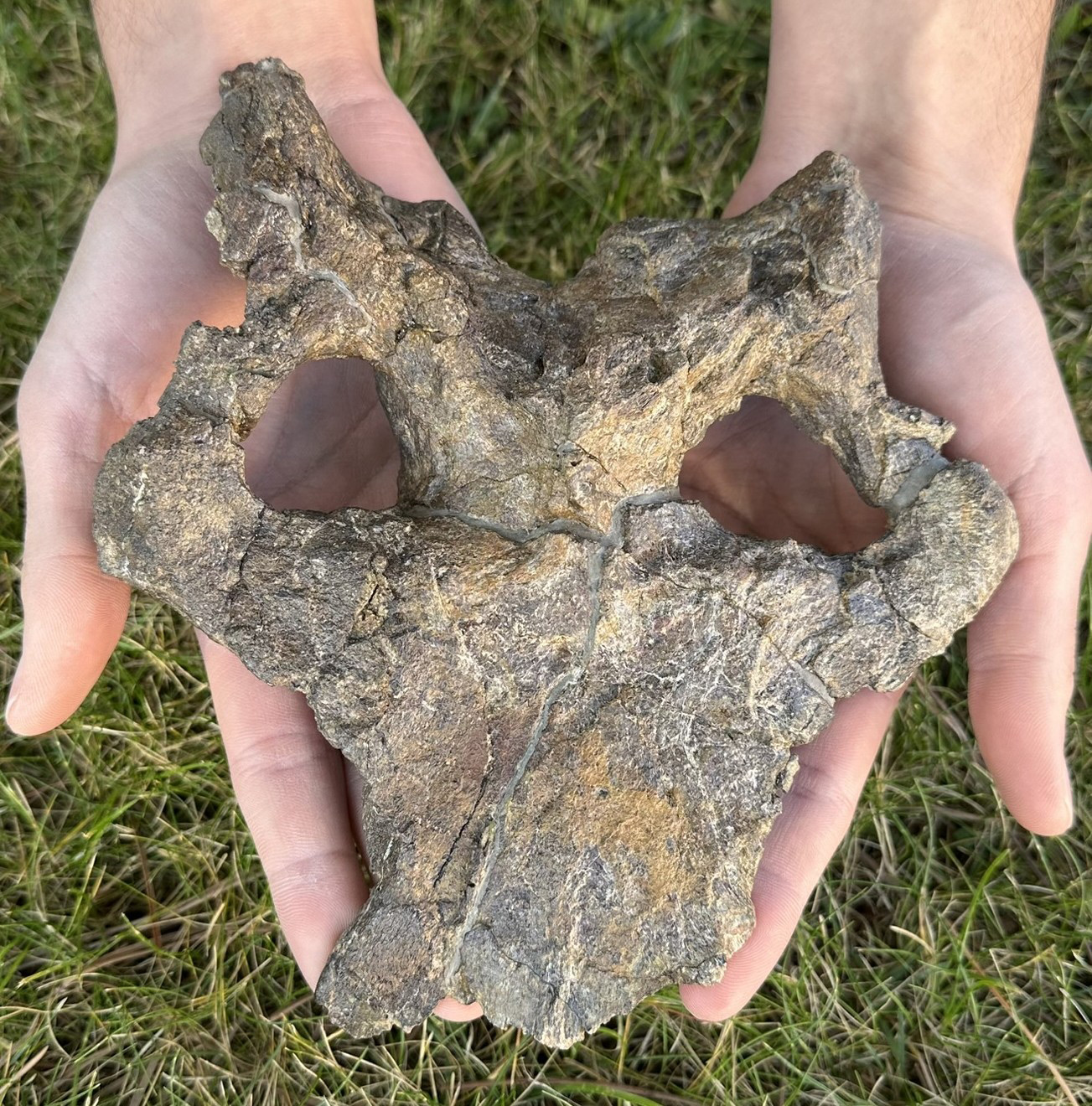
In a new study published Vertebrate Zoology , paleontologists from Fundación Conjunto Paleontológico Teruel-Dinópolis describe the most complete stegosaur skull ever found Europe. The fossil was discovered at the "Están Colón" site Riodeva, Teruel, Spain, in rocks of Villar Arzobispo Formation. These deposits date to Late Jurassic , about 150 million years ago.

The skull belonged Dacentrurus armatus , European stegosaur first described in 1875. That makes the find especially timely, since 2025 marks 150 years since the species was named. Stegosaur Skulls Rare Skulls are among the rarest stegosaur fossils because their bones were thin and fragile.

Many known species are based mostly

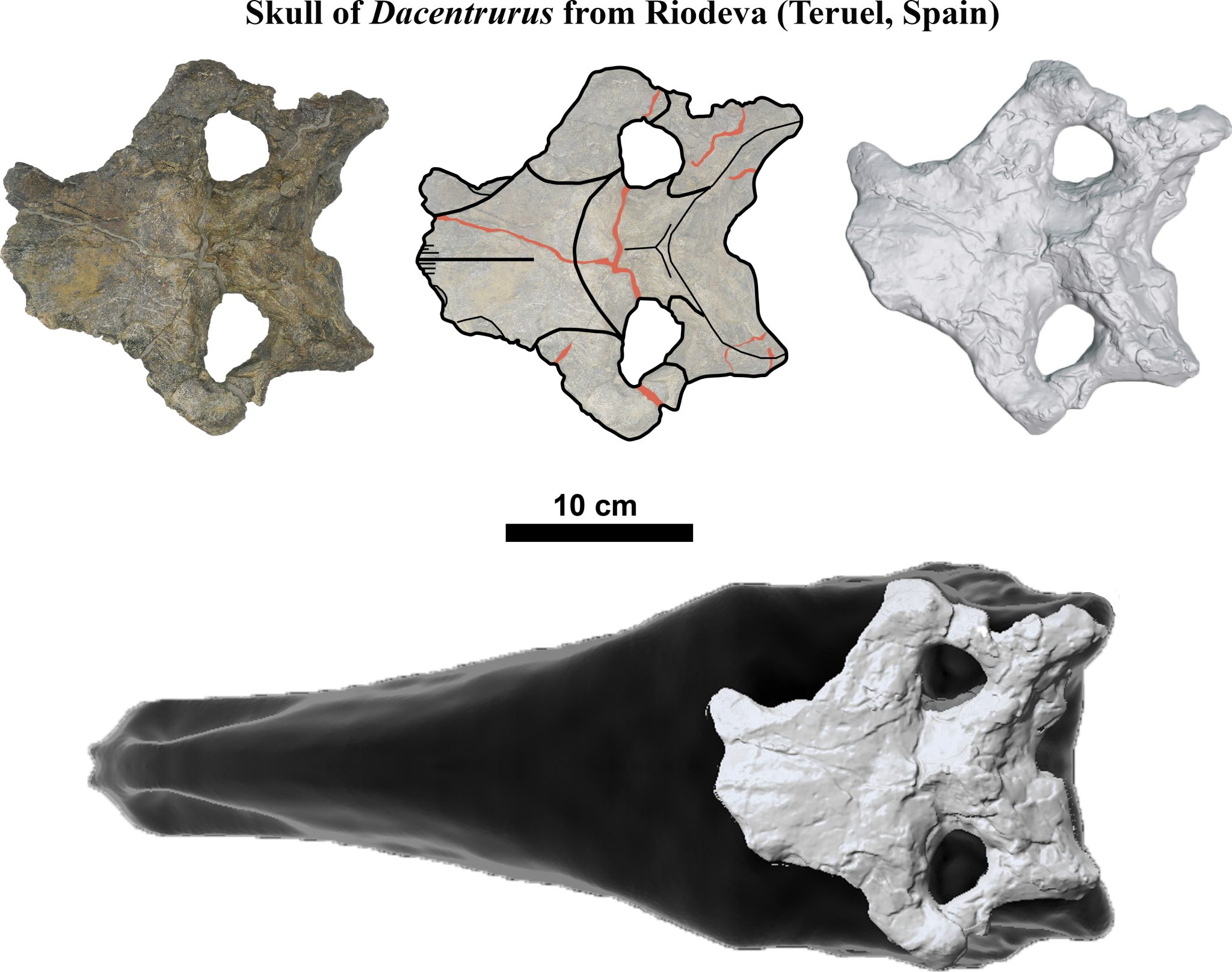
Many known species are based mostly on partial skeletons, which has made it difficult to understand how their heads, feeding anatomy, and family relationships changed over time. This new specimen preserves the back portion of the skull roof, including parts of the frontal, postorbital, squamosal, parietal, and supraoccipital bones. A neck vertebra found beside it helped confirm its identity.

Cranial reconstruction of a stegosaur, showing the studied fossil in its anatomical position Credit: Fundación Conjunto Paleontológico Teruel-Dinópolis Sergio Sánchez Fenollosa, a researcher Fundación Dinópolis and co-author of the study, said: "The detailed study of this exceptional fossil has allowed us to reveal previously unknown aspects of the anatomy Dacentrurus armatus , the quintessential European stegosaur, which in 2025 marks 150 years since its first description.

Dinosaurian skulls are rarely preserved due to the extreme fragility of their bones. This discovery is key to understanding how stegosaurian skulls evolved." The fossil also revealed a previously unknown skull feature Dacentrurus armatus : the supraoccipital, a bone at the back of the skull, was angled differently than in other known stegosaurs.

The researchers suggest this may have

The researchers suggest this may have been linked to the animal's unusually long neck and the way its head was held or supported. Rethinking Stegosaur Evolution The team also used the fossil to build a new evolutionary analysis of stegosaurs, comparing 115 anatomical traits across 30 fossil groups.

Their results divide stegosaurs into two major branches, Huayangosauridae Stegosauridae, and formally introduce a new group called Neostegosauria. This group includes later evolving, medium to large stegosaurs from Africa, Europe, North America, Asia. The analysis also raises broader questions about stegosaur evolution.

It supports the idea that Isaberrysaura mollensis from Argentina was a stegosaur, places Alcovasaurus longispinus Kentrosaurus aethiopicus close Dacentrurus , and suggests that some Asian stegosaurs survived into Early Cretaceous . It also challenges the idea that Wuerhosaurus should be folded into Stegosaurus , pointing instead to the need for a fresh review Early Cretaceous Chinese stegosaurs.

Sánchez Fenollosa added: "Furthermore, alongside the

Sánchez Fenollosa added: "Furthermore, alongside the anatomical study, we have also proposed a new hypothesis that redefines the evolutionary relationships of stegosaurs worldwide.

As a result of this work, we have formalized the definition of a new group called Neostegosauria." Fossil Site Full Potential Alberto Cobos, managing director Fundación Dinópolis and co-author of the paper, said: "This dual achievement, both the study of an exceptional fossil and the proposal of a new evolutionary hypothesis, positions this research as a global reference in stegosaurian studies." Riodeva site has yielded about 200 fossils, including remains of at least two stegosaurs at different growth stages, as well as fossils from theropods, sauropods, ornithopods, crocodylomorphs, and fishes.

More bones from the same adult Dacentrurus specimen are still being prepared, meaning this skull may be only the beginning of what the site can reveal.

Cobos said: "This fossil site from

Cobos said: "This fossil site from Riodeva continues to be a subject of research and still holds numerous relevant fossils, including more postcranial elements from the same adult specimen and, notably, juvenile individuals, a particularly rare combination in this type of dinosaurs.

These discoveries continue to exponentially increase the paleontological heritage of the province Teruel, making it one of the iconic regions for understanding the evolution of life Earth." Reference: "New insights into the phylogeny and skull evolution of stegosaurian dinosaurs: An extraordinary cranium from European Late Jurassic (Dinosauria: Stegosauria)" Sánchez-Fenollosa Alberto Cobos, 26 May 2025, Vertebrate Zoology .

DOI: 10.3897/vz.75.e146618

Quellenprofil

Quelle und redaktionelle Angaben

Quelle
SciTechDaily
Originaltitel
Rewriting Dinosaur Evolution: Scientists Unearth Remarkable 150-Million-Year-Old Stegosaur Skull
Canonical
https://scitechdaily.com/rewriting-dinosaur-evolution-scientists-unearth-remarkable-150-million-year-old-stegosaur-skull/
Quell-URL
https://scitechdaily.com/rewriting-dinosaur-evolution-scientists-unearth-remarkable-150-million-year-old-stegosaur-skull/

Aehnliche Inhalte

Verwandte Themen und interne Verlinkung

Weitere Artikel aus aehnlichen Themenfeldern, damit Leser direkt im selben Kontext weiterlesen koennen.