Alarmierende Entdeckung: Warmes Wasser nähert sich Antarktis
Warmes Tiefwasser wandert näher an Antarktis heran und bedroht Eisschelfe sowie die globale Ozeanzirkulation, Auswirkungen auf Meeresspiegel und Klima.

Kurzfassung
Warum das wichtig ist
- Warmes Tiefwasser wandert näher an Antarktis heran und bedroht Eisschelfe sowie die globale Ozeanzirkulation, Auswirkungen auf Meeresspiegel und Klima.
- Warm, deep water is shifting closer Antarctica, threatening ice shelves and altering global ocean circulation, with implications for sea level and climate.
- A long-term analysis of ocean data has revealed that heat stored deep in the ocean is moving closer Antarctica, raising concerns about the stability of the ice shelves that surround the continent.
The research, led in collaboration with University California and published Communications Earth & Environment, brought together decades of measurements from research vessels and robotic floats. The team found that a body of warm water known as circumpolar deep water has both expanded and shifted toward Antarctic continental shelf over the past 20 years.
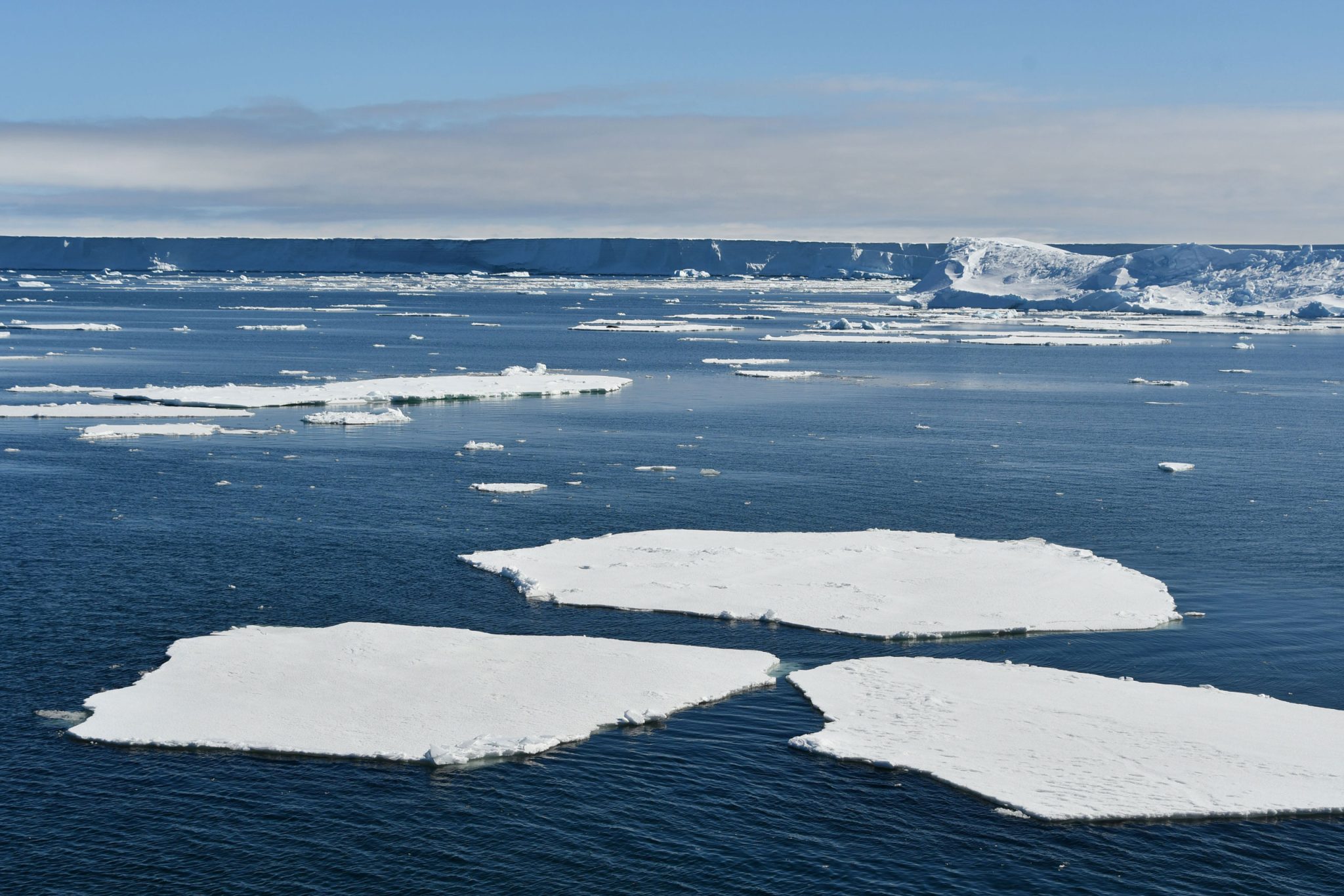
Until now, scientists lacked enough consistent observations to confirm this warming trend. "It's concerning because this warm water can flow beneath Antarctic ice shelves, melting them from below and destabilizing them," said Joshua Lanham, lead author of the study from Cambridge's Department Earth Sciences. Antarctic Shelves Level Threat Ice shelves act as barriers that slow the flow of glaciers and ice sheets into the ocean.
Together, these ice reserves contain enough freshwater to raise global sea levels 58 meters (about 190 feet). Lanham noted that this is the first clear evidence of deep ocean heat shifting across Southern Ocean. "It's something that had been predicted global warming, but we hadn't seen it in data." Historically, observations in Southern Ocean relied on ship-based surveys conducted about once every ten years.

These surveys provided detailed snapshots of
These surveys provided detailed snapshots of temperature, salinity, and nutrients, but gaps between measurements made it difficult to track long-term changes in heat distribution. Filling Data Gaps With Floats Machine Learning To improve coverage, researchers added data from a global network of autonomous Argo floats, which drift through the upper ocean and collect continuous measurements.
Although these floats offer more frequent data, they have not been operating as long as ship-based surveys. Argo floats, pictured here, are robotic devices that drift through the upper water column collecting real-time ocean data. A global network of these instruments provides continuous snapshots of the ocean, but the programme hasn't been running as long as ships have been collecting detailed hydrographic sections.
Credit: Scripps Institution Oceanography, Diego The team used machine learning to merge float data with long-term ship observations, creating a detailed monthly record spanning the past 40 years. This approach revealed the gradual movement of warm water toward Antarctica. "In the past, the ice sheets were protected by a bath of cold water, preventing them from melting.

Now it looks like the ocean's
Now it looks like the ocean's circulation has changed, and it's almost like someone turned on the hot tap and now the bath is getting warmer!" said Professor Sarah Purkey, one of the senior authors of the study from Scripps Institution Oceanography.
She added that the expansion of this warm water is expected, since more than 90 percent of excess heat from global warming is stored in the ocean, with Southern Ocean absorbing a large.
Global Climate Ocean Circulation Impacts The shift in ocean heat has implications beyond Antarctica, said Professor Mashayek from Cambridge. "The Southern Ocean plays a key role in regulating global heat and carbon storage, so changes in heat distribution here have wider implications for the global climate system." In polar regions, freezing and dense water sinks to the deep ocean, helping drive a global circulation system often described as a conveyor belt.
This system includes Atlantic Meridional Overturning
This system includes Atlantic Meridional Overturning Circulation (AMOC), which moves water through Atlantic Ocean. Climate models used rising air temperatures and increased freshwater from melting ice are reducing the formation of this dense water in North Atlantic. This process could weaken the AMOC. Evidence Climate Predictions Already Happening Similar patterns are now expected in Southern Ocean.
Models have predicted that less cold, dense water will form near Antarctica, allowing warmer circumpolar deep water to move in and fill the gap. "We can now see this scenario is already emerging in the observations," said Lanham. "This isn't just a possible future scenario suggested; it's something that is happening now, bringing wider implications for how carbon, nutrients, and heat are cycled through the global ocean." Reference: "Poleward migration of warm Circumpolar Deep Water towards Antarctica", Sarah Purkey, Kaushik Srinivasan, Matthew Mazloff, Laura Cimoli Mashayek, 28 April 2026, Communications Earth & Environment.
Thema weiterverfolgen
Interne Verlinkung
Im Kontext weiterlesen
Diese weiterfuehrenden Links verbinden das Thema mit relevanten Archivseiten, Schlagwoertern und inhaltlich nahen Artikeln.
Welt Archiv
Weitere Meldungen aus derselben Hauptkategorie.
Mehr von SciTechDaily
Alle veroeffentlichten Inhalte derselben Quelle im Archiv.
DNA-Entdeckung enthüllt massiven Bevölkerungsrückgang in Frankreich während der Steinzeit
Redaktionell verwandter Beitrag aus dem selben Themenumfeld.
Wissenschaftler entdecken verborgene Eigenschaft des Lichts, die Materie verdreht
Redaktionell verwandter Beitrag aus dem selben Themenumfeld.
Quellenprofil
Quelle und redaktionelle Angaben
- Quelle
- SciTechDaily
- Originaltitel
- Unusually Warm Water Detected Creeping Toward Antarctica – and Scientists Are Alarmed
- Canonical
- https://scitechdaily.com/unusually-warm-water-detected-creeping-toward-antarctica-and-scientists-are-alarmed/
- Quell-URL
- https://scitechdaily.com/unusually-warm-water-detected-creeping-toward-antarctica-and-scientists-are-alarmed/
Aehnliche Inhalte
Verwandte Themen und interne Verlinkung
Weitere Artikel aus aehnlichen Themenfeldern, damit Leser direkt im selben Kontext weiterlesen koennen.

DNA-Entdeckung enthüllt massiven Bevölkerungsrückgang in Frankreich während der Steinzeit
Eine genetische Untersuchung eines vorgeschichtlichen Grabplatzes in der Nähe Bruch zwischen zwei Populationen und deutet auf einen massiven Rückgang gefolgt
06.05.2026
Live Redaktion
Wissenschaftler entdecken verborgene Eigenschaft des Lichts, die Materie verdreht
Eine neue Messmethode zeigt, dass Licht nanoskalige Objekte auf unerwartete Weise verdrehen kann. Licht ist nicht nur etwas, das wir sehen. Es kann auch physikalische Kräfte ausüben, Materie drücken und verdrehen.
06.05.2026
Live Redaktion
Artemis II: NASA steht mit dem Mond-Rückkehr-Ziel näher denn je
Erste Inspektionen zeigen, dass Hitzeschutz wie vorgesehen funktioniert hat und keine unerwarteten Probleme aufgetreten sind.
06.05.2026
Live Redaktion
NASA schaltet Instrument an Voyager 1 ab, um das Raumschiff im tiefen Weltraum zu erhalten
Im Laufe Zeit lieferte es wesentliche Daten ber das interstellare Medium, darunter Identifizierung Teilchendichte jenseits Heliosphre.
06.05.2026
Live Redaktion