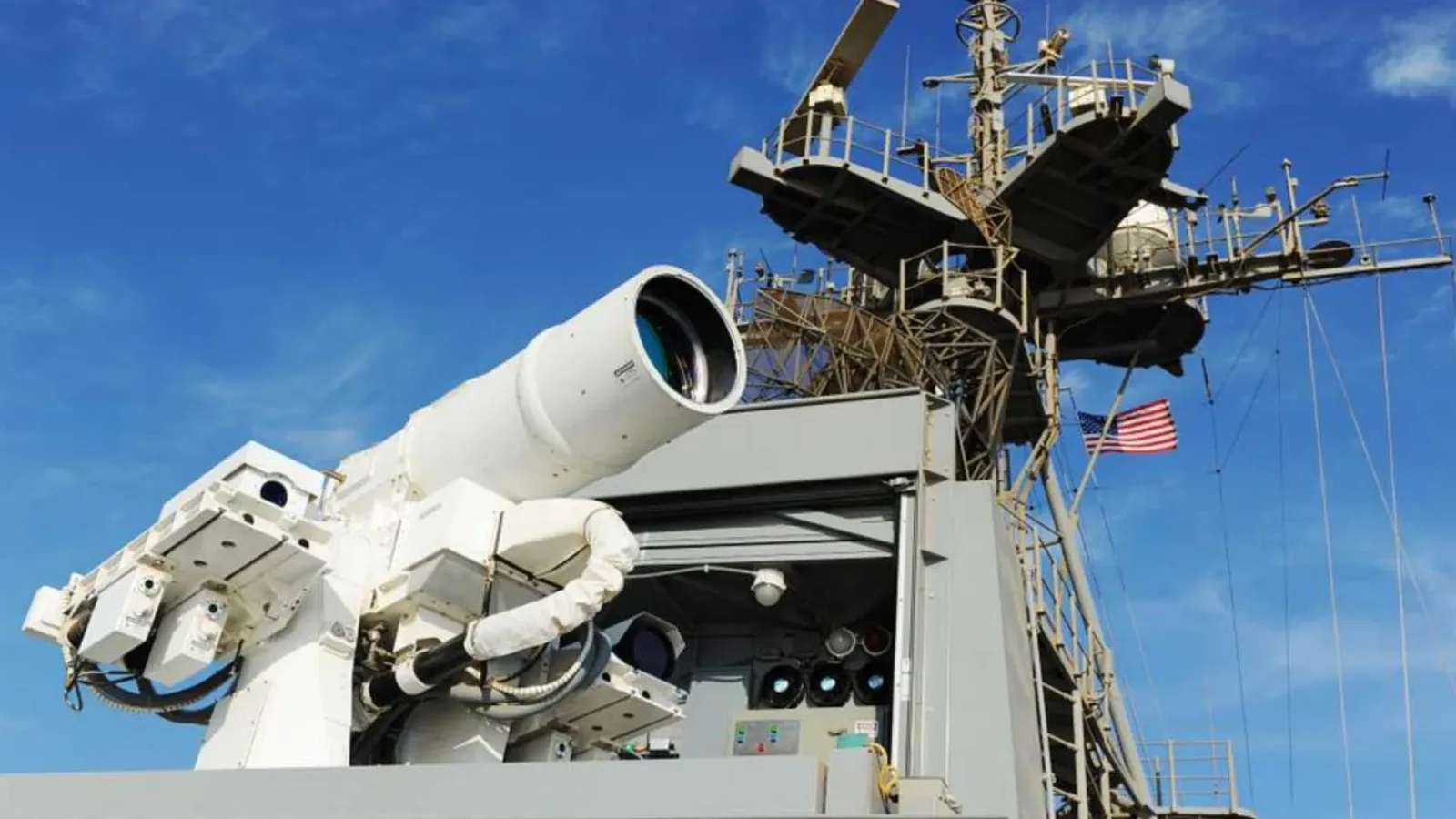
Neun US-Zerstörer mit Laserwaffen zur Drohnenabwehr
Das Fleet Forces Command gab ebenfalls zu, dass „jede Zelle im vertikalen Startsystem (VLS), die für einen defensiven Raketenabschuss genutzt wird, eine verpasste Chance für einen langstreckenoffensiven Schlag darstellt"
Kurzfassung
Warum das wichtig ist
- Das Fleet Forces Command gab ebenfalls zu, dass „jede Zelle im vertikalen Startsystem (VLS), die für einen defensiven Raketenabschuss genutzt wird, eine verpasste Chance für einen langstreckenoffensiven Schlag darstellt"
- Navy destroyers, laser weapons have moved from experimental demonstrations to deployment.
- This technology addresses a very specific strategic concern.
In Naval warfare, it is becoming increasingly difficult to defend against large numbers of relatively inexpensive threats such as drones, loitering munitions, and fast attack craft.Intercepting these with missiles can quickly become expensive and deplete a ship’s limited magazine. The U.S.
Navy is therefore pushing directed-energy systems as a complementary layer of defense rather than a replacement for existing weapons.This approach has gained more traction, particularly after sustained US operations in the Red Sea and Middle East, where destroyers faced repeated drone and missile threats.
While talking about the Navy’s future laser fleet and missile capacity challenges, Vice Admiral Brendan McLane Caudle, Commander of U.S. Fleet Forces Command,also said that “Every VLS cell used for a defensive missile is a lost opportunity for a long-range offensive strike.”The U.S. Navy currently equips nine of its destroyers with laser weapons.1.
Technik und Auswirkungen
USS Preble (DDG-88): The Only Destroyer Equipped With HELIOSThe most advanced laser-equipped destroyer currently known is the USS Preble (DDG-88). It carries the High Energy Laser with Integrated Optical-dazzler and Surveillance (HELIOS), a Lockheed Martin-developed system rated at over 60 kilowatts.
Unlike earlier systems, HELIOS is integrated directly into the ship’s Aegis combat architecture and is designed not only to dazzle sensors but also to physically engage targets such as drones and small boats.HELIOS represents the Navy’s highest-profile operational laser effort because it moves beyond sensor disruption toward hard-kill capability.
This system is also viewed as a major step towards future higher-powered directed-energy weapons intended for missile defense roles.2. USS Kidd (DDG-100)The USS Kidd (DDG-100) is among the destroyers fitted with the Optical Dazzling Interdictor Navy (ODIN) system. ODIN is not a high-energy destructive laser like HELIOS.
Technik und Auswirkungen
Instead, it is intended to disrupt or blind optical sensors on drones and surveillance systems.The Kidd is an Arleigh Burke Flight IIA destroyer that has operated extensively in the Indo-Pacific and Middle East regions.

Its inclusion in the ODIN fleet shows the Navy’s interest in integrating anti-drone capabilities into frontline destroyers operating in areas where unmanned systems are becoming increasingly common.3. USS Sterett (DDG-104)The USS Sterett (DDG-104) also carries ODIN.
The system provides an additional defensive layer against unmanned systems, especially reconnaissance drones that rely heavily on cameras and electro-optical sensors.The destroyer has participated in operations across the Pacific and has deployed as part of carrier strike groups.
Its operational profile makes it representative
Its operational profile makes it representative of how ODIN is being embedded into vessels already carrying out routine forward deployments.4. USS Dewey (DDG-105)The USS Dewey (DDG-105) was one of the earliest destroyers publicly associated with laser integration efforts and later received ODIN.
The vessel had earlier exposure to experimental laser programs before the Navy moved toward operational deployment. The ship is notable because it helped bridge the transition from demonstration systems to actual laser deployment.5. USS Stockdale (DDG-106)The USS Stockdale (DDG-106) is another ODIN-equipped destroyer identified in publicly available records.
It forms part of the expanding operational footprint of directed-energy systems within the Arleigh Burke fleet. The destroyer has been deployed to multiple regions globally, with operations heavily focused on the Middle East, the Indo-Pacific, and most recently, the Caribbean and North American coastline.6.
USS Spruance (DDG-111)The USS Spruance (DDG-111)
USS Spruance (DDG-111)The USS Spruance (DDG-111) has drawn particular attention because it has operated in regions linked to ongoing tensions with Iran while carrying ODIN.
The War Zone noted it among destroyers deployed in support of operations around the Indian Ocean and broader CENTCOM area.Its operational environment is significant because the Middle East has become one of the clearest demonstrations of the low-cost drone threat the Navy is attempting to address.

Deploying ODIN-equipped destroyers in such regions gives the service an opportunity to assess laser systems under conditions closer to real-world operational demands.7. USS John Finn (DDG-113)The USS John Finn (DDG-113) is another operational destroyer equipped with ODIN and deployed in forward areas.
Technik und Auswirkungen
The destroyer has operated in the Indian Ocean in support of U.S. operations around the CENTCOM area, making it another one of the ODIN-equipped ships deployed close to active threat environments where drones have become increasingly relevant.8. USS Gridley (DDG-101)The USS Gridley (DDG-101) has also been identified among destroyers fitted with ODIN.
The ship has operated with the USS Nimitz carrier group and was recently deployed in the South Atlantic while escorting the carrier during its transit. The ship has also frequently conducted exercises and maneuvers with allied navies, including PASSEX maneuvers with the Indian Navy and the Royal Saudi Naval Forces.9.
USS Halsey (DDG-97)The USS Halsey (DDG-97) completes the known list of publicly identified ODIN-equipped destroyers. Homeported in Yokosuka, Japan, the destroyer operates in the Indo-Pacific, placing a laser-equipped vessel in one of the U.S.
Technik und Auswirkungen
Navy’s most strategically important regions where drone surveillance and regional maritime competition remain persistent concerns.US Navy’s position on laser-based Naval air defenceThe U.S. Navy’s interest in lasers ultimately comes down to economics and endurance.
A missile interceptor can cost hundreds of thousands or even millions of dollars, while many attack drones cost a fraction of that amount.
Lasers theoretically reduce the cost per engagement to the electricity needed to fire them while also avoiding the magazine limits imposed Burke destroyers carry 90–96 VLS cells, and once expended, they cannot simply reload at sea under combat conditions.The Navy does not view lasers as replacing missiles.
Instead, they are seen as an additional defensive layer intended to preserve expensive interceptors for high-value threats while handling drones and other low-cost targets more efficiently.
Thema weiterverfolgen
Interne Verlinkung
Im Kontext weiterlesen
Diese weiterfuehrenden Links verbinden das Thema mit relevanten Archivseiten, Schlagwoertern und inhaltlich nahen Artikeln.
Technologie Archiv
Weitere Meldungen aus derselben Hauptkategorie.
Mehr von Interesting Engineering
Alle veroeffentlichten Inhalte derselben Quelle im Archiv.
Chinas humanoid Roboter ernten Tee: Feldversuche starten
Redaktionell verwandter Beitrag aus dem selben Themenumfeld.
Suchbegriff "disregard" bricht Google-Suche: So sieht es aus
Redaktionell verwandter Beitrag aus dem selben Themenumfeld.
Quellenprofil
Quelle und redaktionelle Angaben
- Quelle
- Interesting Engineering
- Originaltitel
- Nine US Navy destroyers that carry laser weapons for drone defense
- Canonical
- https://interestingengineering.com/military/nine-us-laser-armed-destroyers
- Quell-URL
- https://interestingengineering.com/military/nine-us-laser-armed-destroyers
Aehnliche Inhalte
Verwandte Themen und interne Verlinkung
Weitere Artikel aus aehnlichen Themenfeldern, damit Leser direkt im selben Kontext weiterlesen koennen.

Chinas humanoid Roboter ernten Tee: Feldversuche starten
Humanoid-Roboter sind über Laufbahnen nun auch Teeplantagen China gelandet, als Teams, die an den Weltmeisterschaften für Humanoid-Roboter 2026 teilnehmen, am 10.
22.05.2026
Live Redaktion
Suchbegriff "disregard" bricht Google-Suche: So sieht es aus
Wie absurd es auch sein mag: Ja, wenn Sie den Begriff „disregard" gerade bei Google eingeben, erhalten Sie ein defektes Suchergebnis, was amüsant ist, insbesondere da dieser Fehler einige Tage nach der I/O 2026-Keynote
22.05.2026
Live Redaktion
Cyberkriminelle nutzen sechsschichtige Persistenz, um Zugriff auf kompromittierte FreePBX-Systeme zu erhalten
Eine Hackergruppe namens INJ3CTOR3 führt eine aktive Kampagne gegen FreePBX-Systeme durch und setzt dabei eine neu entdeckte PHP-Webshell namens JOMANGY ein, die sechs separate Persistenzschichten nutzt, um sich auf komp
22.05.2026
Live Redaktion
Apple plant iPhone 18 Pro zum Notrufgerät: So verwandelt das Unternehmen das Smartphone in ein lebensrettendes Gerät ohne Grenzen.
So fortschrittlich Smartphones auch sind, bezweifeln wir, dass Unternehmen die Möglichkeiten ihrer Geräte auch nur annähernd erschlossen haben.
22.05.2026
Live Redaktion