Gigantische Löwenzahnarten auf Darwins Inseln: Neue Entwicklungen der Evolution
Die Galápagos-Vögel veranschaulichen eine fortlaufende Evolution und Entstehen neuer Arten und betonen damit Flexibilität und die aktive Rolle Evolution heute.

Kurzfassung
Warum das wichtig ist
- Die Galápagos-Vögel veranschaulichen eine fortlaufende Evolution und Entstehen neuer Arten und betonen damit Flexibilität und die aktive Rolle Evolution heute.
- Galápagos plants show repeated evolution and emerging species, emphasizing evolution's flexibility and active role today.
- Galápagos Islands have long stood as a living laboratory of evolution, but their story is far from finished.
Nearly two centuries after Darwin's famous finches reshaped our understanding of life, new research reveals that evolution on these remote islands is still unfolding in unexpected ways. When Charles Darwin arrived in 1835 aboard the Beagle, he collected birds that he later studied England. At first, he thought they included sparrows, woodpeckers, finches, and even a single tit.
He later realized they were all closely related finches, with differences in their beaks reflecting adaptations to different diets. This became a classic example of parallel evolution, where similar traits emerge more than once but through different genetic routes.
Darwin's observations of these finches helped support his theory of evolution, showing how species can change over time in response to their environments. "More than 150 years after Darwin's work on Galápagos transformed our understanding of life Earth, these islands continue to reveal new biology," says Professor Michael D. Martin at Norwegian University Science Technology's (NTNU) University Museum.

Ongoing Discoveries Galápagos Science Martin is
Ongoing Discoveries Galápagos Science Martin is part of a global research team that includes scientists from Royal Botanic Gardens, Kew; University California, Davis; University Copenhagen; Charles Darwin Foundation in Galápagos; University Georgia, Athens; University British Columbia; and other institutions.
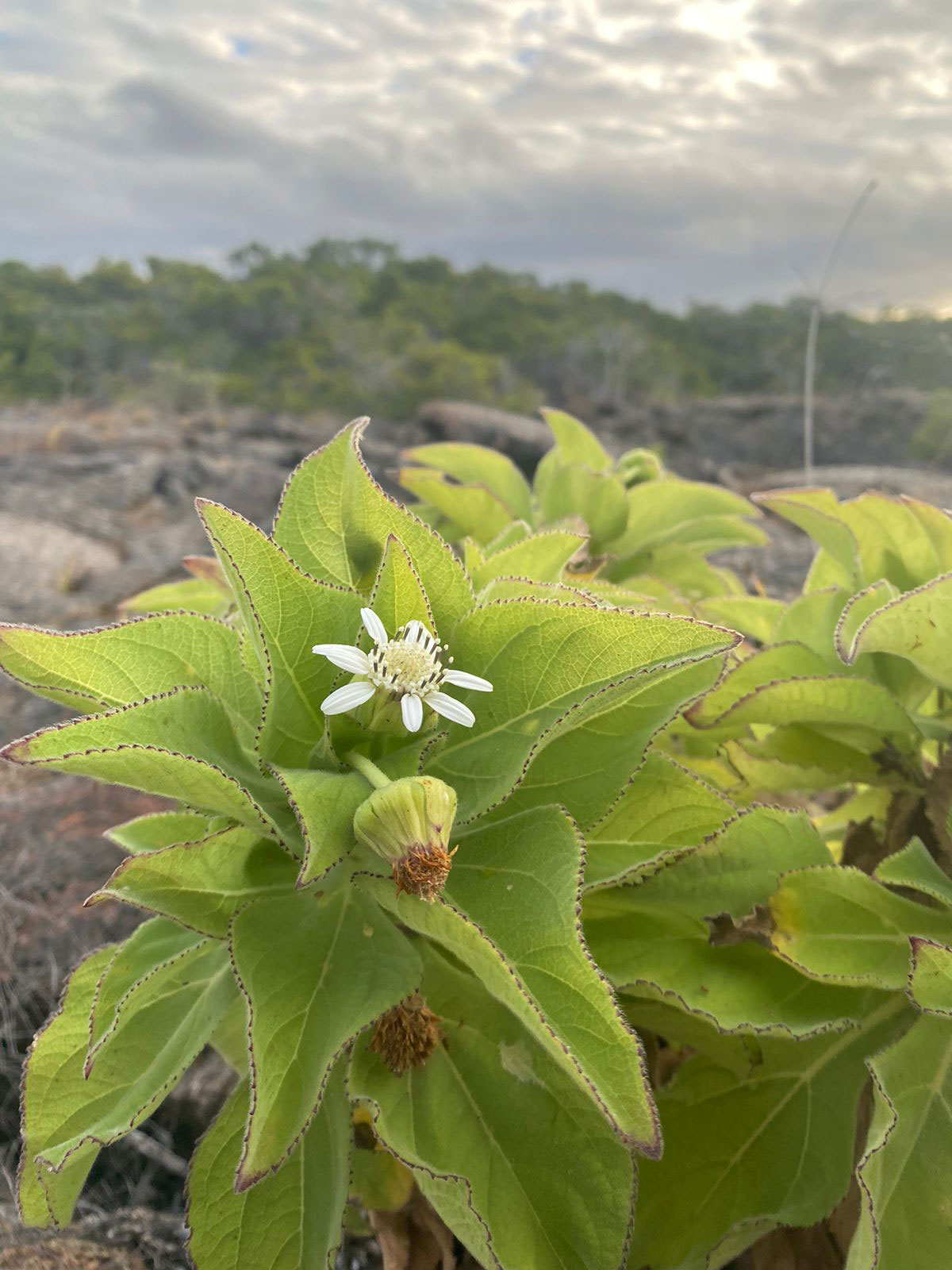
Together, they examined evolution in the plant genus Scalesia, often called Galápagos giant daisies. Their findings were recently published Nature Communications. "Just like Darwin's famous finches, these plants evolved rapidly after arriving on Galápagos from mainland South America," says Vanessa Bieker of Royal Botanic Gardens, Kew, the study's lead author.
Scalesia genus is relatively young, with all existing species emerging within the past one million years. Despite this short timespan, they have adapted to a wide range of island environments, from humid highland forests to dry lowland areas. "The appearance of different species varies dramatically, from low shrubs to tall trees.

Most striking are the leaves, which
Most striking are the leaves, which range from large and entire to small and deeply lobed," says Martin. Leaf Adaptations Genetic Mysteries Lobed leaves, often with complex and jagged edges, are believed to help these plants cope with heat and dryness improving heat release.
Until now, scientists did not know how this trait developed at the genetic level. of all known Scalesia species, the team found that lobed leaves evolved multiple times, appearing independently in different branches of the family tree. Some populations may already be on separate evolutionary paths. Many Scalesia groups could represent unique lineages that have not yet been formally classified as distinct species.
Parallel Evolution Genetic Pathways "Even more surprising was that each time this trait evolved, it did so through different genes—even though all of them belong to the same biological system controlling leaf development," says Bieker. "This provides a clear example of parallel evolution: nature arriving at the same solution multiple times, but through different genetic pathways.

Instead of being controlled by a
Instead of being controlled by a single ‘master gene,' evolution appears to draw on an entire network of interacting genes, tweaking different components to produce similar outcomes." Repeated Trait Evolution Ongoing Speciation These findings offer new insight into how complex traits can evolve repeatedly in nature.
The study also shows that evolution in these plants is still happening today. "Populations within the same species show large genetic differences and have been isolated from one another for long periods. This means new species may be in the process of forming. Many Scalesia populations may represent distinct evolutionary lineages that have not yet been formally described," says Martin.
Conservation Implications Evolution Action The researchers suggest that each isolated population should be treated as its own conservation unit, which could change how Galápagos ecosystem is protected in the future. Their work also provides a detailed view of how a single species can quickly branch into many distinct forms. "Our findings highlight the flexibility and creativity of evolution," says Bieker.
She notes that Darwin also collected
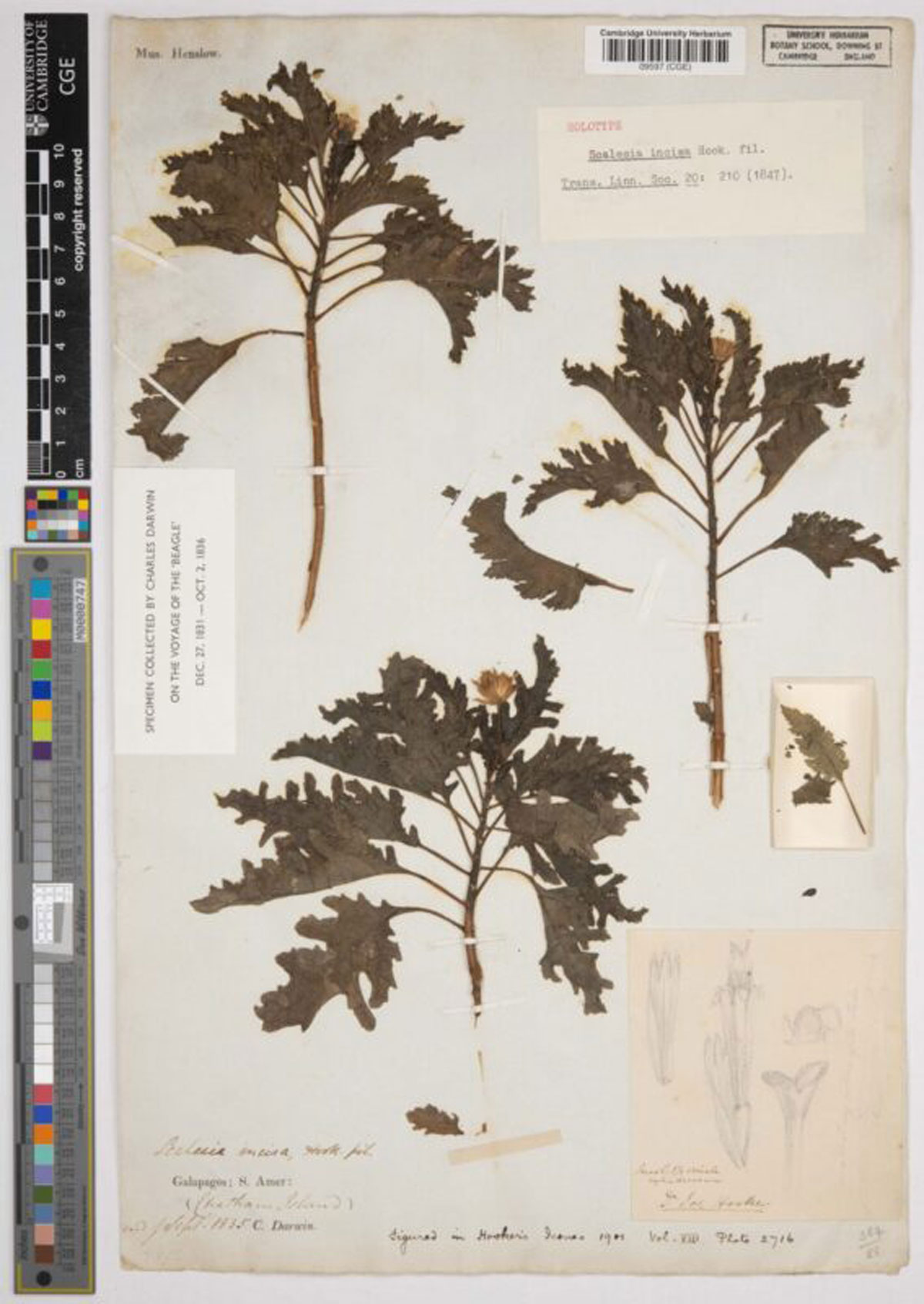
She notes that Darwin also collected many plant specimens during his time in Galápagos. Seventy-eight of these were later identified as entirely new species, including four types Scalesia.
Reference: "The genomic basis of adaptive leaf variation in Galápagos giant daisies", Siyu Li, José Cerca, Paul Battlay, Mohsen Falahati Anbaran, Amit Sharma, Patricia Jaramillo Díaz, Mario Fernández-Mazuecos, Jazmín Ramos-Madrigal, Sarah L. F. Martin, Luisa Santos-Bay, Gitte Petersen, Seberg, Pablo Vargas, Rasmus Nielsen, M. Thomas P.
Gilbert, Gonzalo Rivas-Torres, James Leebens-Mack, Loren H. Rieseberg, Lene R. Nielsen, Neelima Sinha Michael D. Martin, 16 April 2026, Nature Communications. DOI: 10.1038/s41467-026-71865-3
Thema weiterverfolgen
Interne Verlinkung
Im Kontext weiterlesen
Diese weiterfuehrenden Links verbinden das Thema mit relevanten Archivseiten, Schlagwoertern und inhaltlich nahen Artikeln.
Welt Archiv
Weitere Meldungen aus derselben Hauptkategorie.
Mehr von SciTechDaily
Alle veroeffentlichten Inhalte derselben Quelle im Archiv.
Neue Speichertechnologie ermöglicht Geräten Monate langer Akkulaufzeit
Redaktionell verwandter Beitrag aus dem selben Themenumfeld.
Wissenschaftler nutzen Krebs-eigene Bakterien in bahnbrechender Therapie
Redaktionell verwandter Beitrag aus dem selben Themenumfeld.
Quellenprofil
Quelle und redaktionelle Angaben
- Quelle
- SciTechDaily
- Originaltitel
- Darwin’s Islands Still Evolving: Giant Daisies Rewrite the Rules of Evolution
- Canonical
- https://scitechdaily.com/darwins-islands-still-evolving-giant-daisies-rewrite-the-rules-of-evolution/
- Quell-URL
- https://scitechdaily.com/darwins-islands-still-evolving-giant-daisies-rewrite-the-rules-of-evolution/
Aehnliche Inhalte
Verwandte Themen und interne Verlinkung
Weitere Artikel aus aehnlichen Themenfeldern, damit Leser direkt im selben Kontext weiterlesen koennen.

Neue Speichertechnologie ermöglicht Geräten Monate langer Akkulaufzeit
Forscher haben ein winziges Speichergerät entwickelt, das mit abnehmender Größe leistungsfähiger wird und damit eine wesentliche Grenze Elektronik durchbrochen hat.
09.05.2026
Live Redaktion
Wissenschaftler nutzen Krebs-eigene Bakterien in bahnbrechender Therapie
Eine neu entwickelte Therapie, die , die innerhalb , bietet einen alternativen Ansatz Bekämpfung , indem sie darauf abzielt, Tumorzellen Energie produzier
09.05.2026
Live Redaktion
Cannabis löst Erinnerungen an nie stattgefundene Ereignisse aus
Cannabis kann mehr bewirken als lediglich Verwischen ; es kann tatsächlich verändern, Erinnerungen gebildet und abgerufen werden.
09.05.2026
Live Redaktion
rzte berrascht: Wie diese Impfung das Herz beeinflusst
Eine Gürtelrose-Impfung kann Risiko für Herzinfarkte, Schlaganfälle und Tod Menschen Herzerkrankungen drastisch senken.
08.05.2026
Live Redaktion